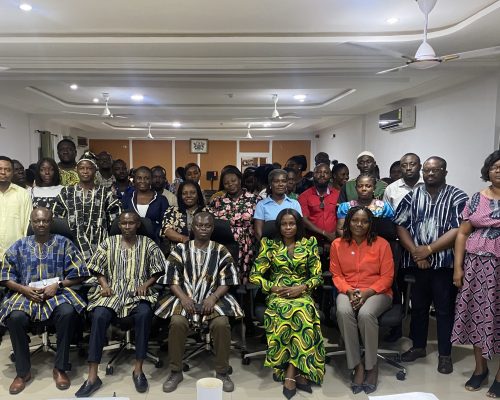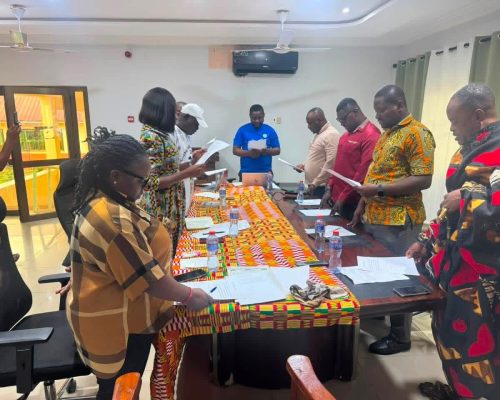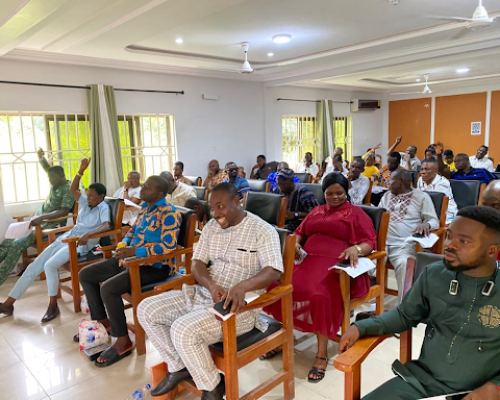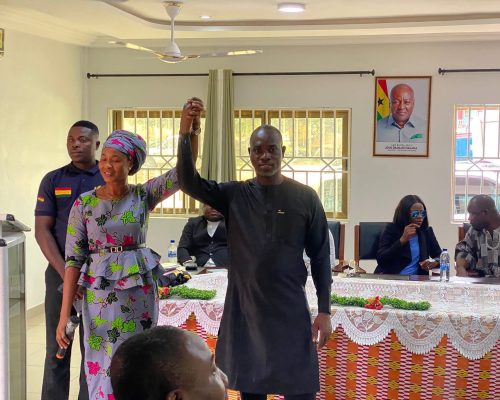
The Upper West Akim District Assembly has reaffirmed its commitment to promoting inclusion and economic empowerment by providing livelihood support and working tools to sixty (60) Persons with Disabilities (PWDs) across the district.
The presentation ceremony, held on Monday, March 29, 2026, at the forecourt of the Assembly in Adieso, brought together beneficiaries, Assembly officials, and community members to witness the distribution of equipment designed to enhance self-reliance and sustainable livelihoods.
The beneficiaries represented a diverse group of persons living with disabilities, including individuals with visual impairment, hearing impairment, intellectual disabilities, physical disabilities, and autism spectrum disorder.
Speaking during the event, the District Chief Executive, Rebecca Chissah, emphasized the Assembly’s dedication to ensuring that persons with disabilities are equipped with the resources needed to become economically independent and actively contribute to the development of their communities.
The items distributed were carefully selected to match each beneficiary’s skills, interests, and livelihood aspirations. They included barbering machines, industrial sewing machines, hair dryers, popcorn machines, fufu pounding machines, deep freezers, farm tools, and other essential equipment to support small businesses and vocational activities.
The initiative forms part of the Assembly’s broader efforts to improve the welfare of vulnerable groups through targeted interventions that promote entrepreneurship, financial independence, and social inclusion.
Beneficiaries expressed heartfelt appreciation to the Assembly for the timely support, noting that the equipment would enable them to expand existing businesses, acquire vocational skills, and improve their standard of living.
The Upper West Akim District Assembly continues to prioritize inclusive development by implementing programmes that create equal opportunities for all residents, particularly persons living with disabilities, to participate meaningfully in the district’s socio-economic growth.